What Is the Best Day Trading Strategy for 2026 and How Do You Build One?
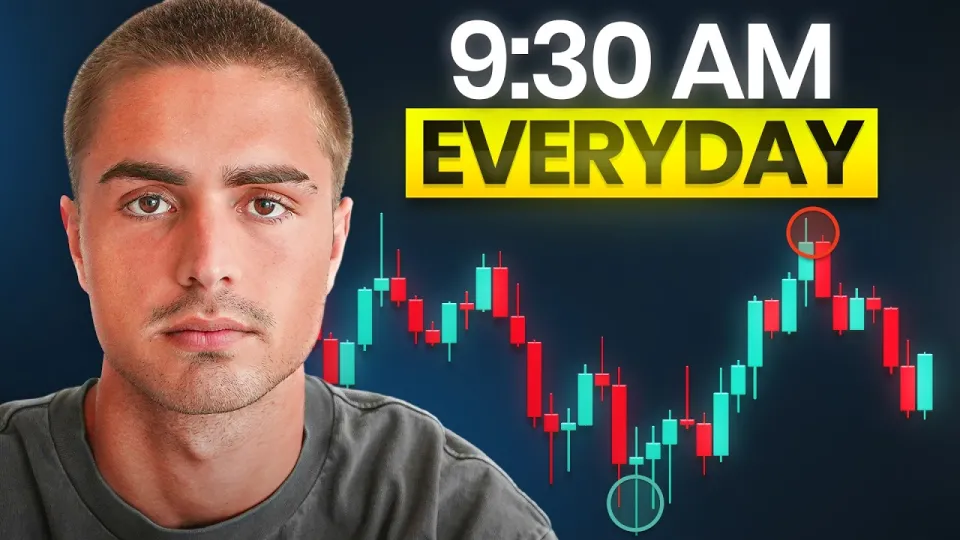
Video: My UPDATED Day Trading Strategy (2026)
You can order the same kind of articles for your own video to boost it on YouTube and Google. Just message the Telegram bot @sat_sit_bot. Articles with your video embedded are written and posted by the bot itself — on popular topical sites (no ads). Try it free: 50 articles on us.
· based on the channel TJR
Day trading is the practice of buying and selling financial instruments within the same trading day, aiming to profit from short-term price movements. The best day trading strategy for 2026 combines a clear technical setup, strict risk management, and psychological discipline—exactly the framework TJR breaks down in his updated video guide. For those ready to go deeper, TJR offers a complete system to becoming a profitable trader: get the blueprint here.
What day trading actually means and why most traders fail
Day trading involves opening and closing positions within a single session, often using futures, forex, or cryptocurrencies. Unlike long-term investing, day trading relies on intraday volatility and tight execution. The main reason most traders fail is not a lack of indicators but poor risk control and emotional decision-making. TJR emphasizes that a strategy must be simple enough to execute under pressure and robust enough to survive losing streaks. Without a repeatable process, even a good setup becomes gambling.
Core components of TJR's updated day trading strategy
The updated strategy focuses on three pillars: market context, precise entries, and strict exits. First, identify the overall market environment—trending or ranging—using higher timeframes. Second, wait for a clear signal at key levels, such as a breakout with volume or a reversal pattern. Third, define your stop-loss and take-profit levels before entering. TJR stresses that confirmation is essential: a level reaction alone is not enough; you need candle close or a follow-through signal to validate the trade. This reduces false entries and improves consistency.
How to manage risk and position sizing
Risk management is the difference between a sustainable trading career and a blown account. TJR recommends risking no more than 1–2% of your account per trade. Position sizing should be calculated based on the distance to your stop-loss, not on gut feeling. For example, if your account is $10,000 and you risk 1%, your maximum loss per trade is $100. If your stop is 10 points away on a futures contract worth $5 per point, you can trade 2 contracts. Always use a stop-loss and avoid moving it wider to "give the trade room." Consistency in risk per trade protects you from catastrophic losses.
The role of psychology and discipline in day trading
Discipline is the most underrated edge in day trading. TJR highlights that following your rules—even when you feel tempted to deviate—is what separates profitable traders from the rest. Common psychological traps include revenge trading after a loss, overtrading during choppy markets, and hesitating to take valid setups. To build discipline, keep a trading journal: record every trade, your emotions, and the outcome. Reviewing your journal weekly helps identify patterns and reinforce good habits. Many viewers of TJR's video echoed that discipline and rule-following are the real keys to success.
Common questions and doubts from new traders
New traders often ask about confirmation: should you wait for a candle close or just a level reaction? TJR clarifies that confirmation typically means a candle close beyond the level or a strong rejection wick, depending on the setup. Another frequent question is whether copy trading or signal groups can replace learning—most experienced traders agree that copying without understanding the strategy leads to losses. Finally, many wonder how long it takes to become profitable. There is no fixed timeline; it depends on your dedication to practice, journaling, and refining your process. TJR's own journey took years of trial and error before consistency emerged.
Tools and resources to support your strategy
A solid strategy needs the right tools. TJR uses and recommends several platforms: indicators for chart analysis, a trading journal like Tradezella to track performance, and funded account programs such as Alpha Futures, Lucid Trading, and Tradeify to scale capital without risking your own savings. These resources are not shortcuts—they complement a well-defined strategy and disciplined execution. Before paying for any tool, demo-test it to ensure it fits your workflow.
Useful links
- Get the exact system to becoming a full-time profitable trader
- Try the indicators TJR uses daily
- Enter Funded Account Raffle
- 10% off Alpha Futures funded accounts
- 40% off Lucid Trading
Final thoughts
Building a profitable day trading strategy in 2026 requires more than a setup—it demands risk control, psychological resilience, and continuous learning. TJR's updated approach provides a structured framework that prioritizes confirmation and discipline over complexity. If you're serious about trading, start with a demo account, journal every trade, and consider TJR's blueprint as a roadmap. Remember, most day traders lose money, so treat education as an investment, not a cost. For a step-by-step system, access TJR's blueprint here and take your first structured step toward consistency.
Key takeaways
- Day trading involves buying and selling within the same day, often using futures, forex, or crypto.
- A solid strategy includes clear entry/exit rules, risk management, and emotional discipline.
- TJR's updated 2026 strategy emphasizes waiting for confirmation and following a repeatable process.
- Most day traders lose money; profitability requires education, practice, and strict rule adherence.
- Tools like trading journals and funded accounts can help scale and track performance.
Source: My UPDATED Day Trading Strategy (2026) · Markdown version
Questions & answers
What does "wait for confirmation" mean in day trading?
Confirmation means waiting for additional evidence that a level will hold or break before entering a trade. This can be a candle close beyond the level, a strong rejection wick, or increased volume. It helps filter out false signals and improves entry accuracy.
How much capital do I need to start day trading?
There is no fixed minimum, but you should have enough to risk 1–2% per trade without emotional stress. Many traders start with $5,000–$10,000 in a margin account or use funded accounts to access larger capital with lower personal risk.
Can I become profitable by copying other traders?
Copy trading can provide exposure, but without understanding the underlying strategy you won't develop the skills to manage risk independently. Most successful traders emphasize learning your own process and using copy trading only as a supplement.
How long does it take to become a consistently profitable day trader?
It varies greatly, but many traders take 1–3 years of dedicated practice, journaling, and strategy refinement before achieving consistency. TJR's experience shows that patience and discipline are more important than a quick fix.